

Buying a new home is one of the most meaningful milestones in an Indian family’s life. Beyond financial planning and interior design, homeowners often seek emotional comfort, stability, and long-term well-being from their living space. This is where Vastu Shastra becomes highly relevant.
Vastu Shastra is an ancient Indian science of architecture that focuses on aligning a home with natural forces such as sunlight, wind direction, magnetic fields, and the five elements of nature. When a home is designed according to Vastu principles, it is believed to support positive energy, peaceful relationships, good health, and prosperity.
This guide explains Vastu tips for a new home in India in a practical, modern, and easy-to-understand way. Whether you are buying a flat, building an independent house, or investing in a gated community villa, these principles will help you make informed decisions
What Is Vastu Shastra and Why It Matters for Indian Homes
Vastu Shastra is based on the idea that the physical environment directly influences human life. The placement of rooms, direction of doors, flow of air, and availability of natural light all affect mental peace and emotional balance.
In Indian homes, where families often live together across generations, Vastu plays an important role in maintaining harmony. A Vastu-compliant house supports smoother relationships, better focus, and a calm living atmosphere. From a real estate perspective, homes designed with Vastu principles also enjoy higher demand, as many buyers actively look for Vastu-aligned properties.
Modern architecture and Vastu are no longer opposites. Today, both work together to create homes that are functional, aesthetic, and energetically balanced.
Importance of Directions in Vastu for New Homes
Directions form the foundation of Vastu planning. Each direction is associated with a specific element and type of energy, and every room performs best when placed in the right zone.
The northeast direction is associated with water, clarity, and spiritual energy. This area should ideally remain open, clean, and light. The southeast direction represents fire and is best suited for the kitchen. The southwest direction symbolises stability and strength, making it ideal for bedrooms and storage. The northwest direction represents air and movement, making it suitable for guest rooms and living spaces.
Understanding directional significance helps homeowners plan layouts that feel naturally comfortable and balanced.
Main Entrance Vastu Tips for a New Home
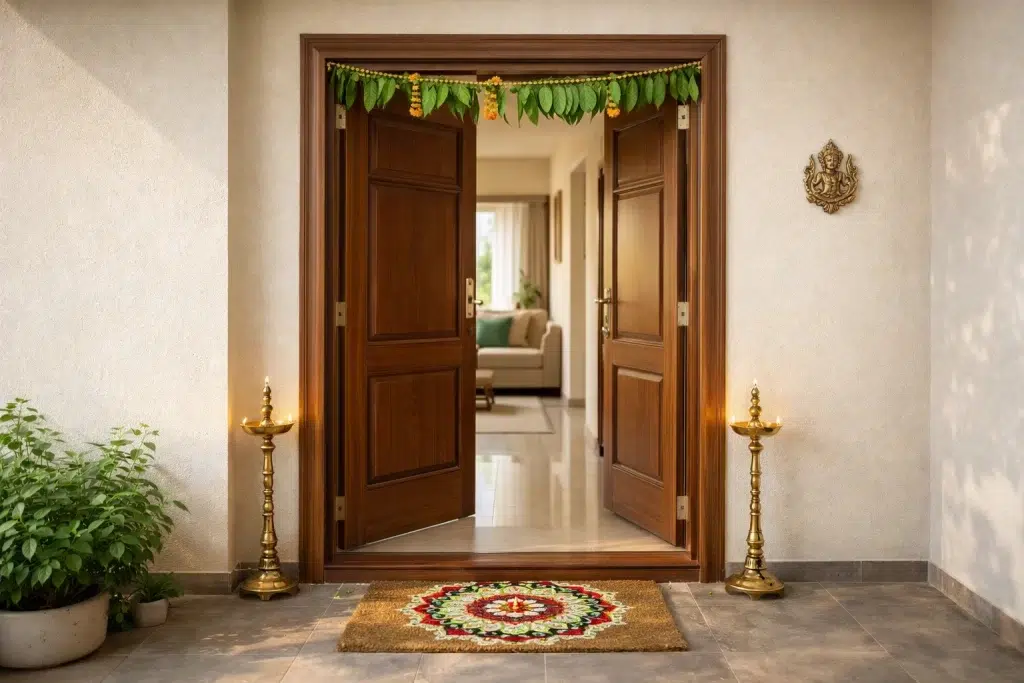
The main entrance is considered the most important part of a house in Vastu Shastra, as it is the entry point for energy. A well-placed entrance allows positive energy to flow freely into the home.
East-facing and north-facing entrances are considered most auspicious in Indian homes. An east-facing entrance welcomes the morning sunlight, which symbolises growth and positivity. A north-facing entrance is associated with wealth and career opportunities.
South-facing and west-facing homes are not automatically negative, but they require careful planning of door position and interior layout. More than the facing direction, the exact placement of the entrance within that wall plays a crucial role.
The entrance area should always be well-lit, clean, and free from clutter. A strong, solid door made of wood is preferred, as it symbolises protection and stability.
Living Room Vastu for Peaceful Family Life
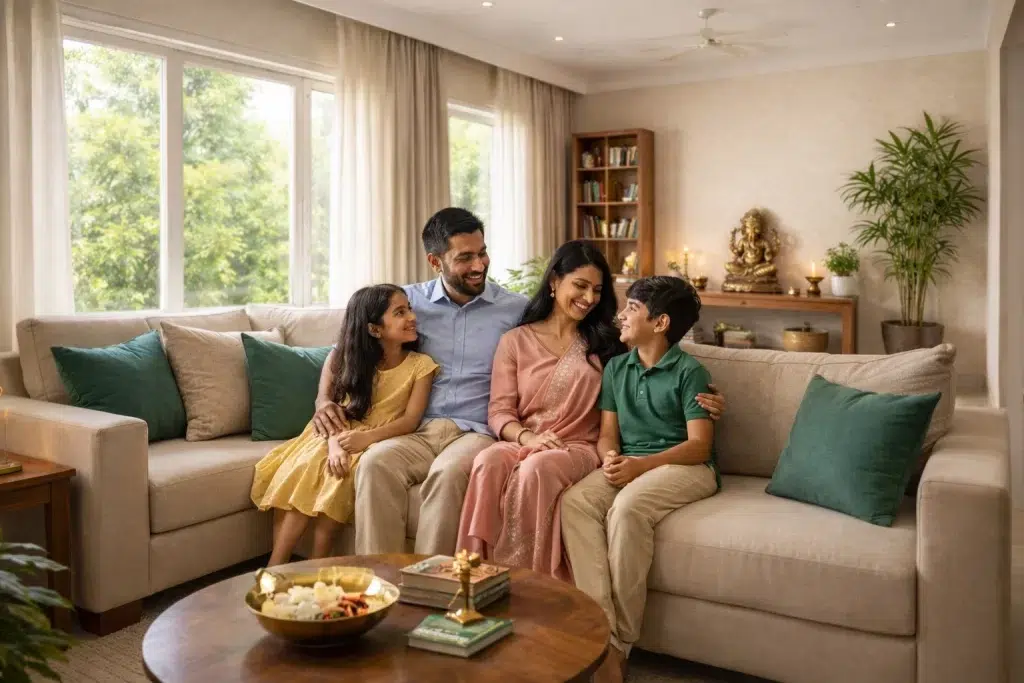
The living room is the space where family members relax and guests gather, making it a key area for social energy. According to Vastu, the living room should ideally be located in the north, northeast, or northwest direction of the house.
These directions support open communication, positive interactions, and mental relaxation. Seating arrangements should allow people to face north or east while sitting, as these directions promote clarity and positivity.
The living room should receive ample natural light and ventilation. Heavy furniture is best placed along the south or west walls, while the centre of the room should remain open to allow free energy flow.
Kitchen Vastu Tips for Health and Energy Balance
In Indian households, the kitchen is considered the heart of the home. Vastu associates the kitchen with the fire element, which governs energy, digestion, and nourishment.
The southeast direction is considered the best location for the kitchen. This alignment ensures balance between fire and other natural elements. If southeast placement is not possible, the northwest direction can be considered with proper adjustments.
The cooking stove should ideally be placed so that the person cooking faces east. Water sources such as sinks and purifiers should be kept at a safe distance from the stove to avoid conflict between fire and water elements.
A clean, well-ventilated kitchen with natural light supports good health and a positive home environment.
Bedroom Vastu Tips for Stability and Good Sleep
Bedrooms are personal spaces meant for rest and emotional comfort. The master bedroom should ideally be located in the southwest direction, which represents stability and grounding.
Sleeping with the head facing east or south is considered beneficial, while north-facing sleeping positions are usually avoided. The bed should be placed against a solid wall and not directly under a beam.
Mirrors should not face the bed, as they are believed to disturb sleep and mental peace. Bedrooms should use calm, soothing colours and avoid excessive electronic devices.
Children’s bedrooms are best placed in the west or northwest direction, supporting growth and creativity, while guest bedrooms work well in the northwest.
Bathroom and Toilet Vastu Guidelines
Bathrooms and toilets should be placed carefully, as they deal with waste disposal and hygiene. The northwest or north direction is considered suitable for these spaces.
Toilets should never be located in the centre of the house, as this can negatively affect health and prosperity. Bathrooms should be well-ventilated, clean, and dry to prevent stagnant energy.
Mirrors in bathrooms should be positioned thoughtfully and not reflect important areas like the kitchen or bed.
Importance of Natural Light and Ventilation in Vastu
Natural light and fresh air are essential components of a Vastu-compliant home. indian Homes that receive adequate sunlight are believed to support physical health, mental clarity, and emotional well-being.
Windows opening towards the east and north allow positive energy to enter the home. Cross ventilation ensures continuous movement of air, preventing stagnation and discomfort.
In modern Indian homes, combining Vastu principles with open layouts, balconies, and large windows enhances both comfort and energy efficiency.
Vastu Colours for a New Home
Colours play a powerful role in influencing mood and energy. Vastu recommends light and calming colours that promote balance and peace.
Shades such as white, cream, light yellow, pastel green, and soft blue are ideal for most living spaces. Dark colours like black or deep red should be used sparingly, especially in bedrooms and living rooms.
Choosing colours based on the function of each room helps maintain harmony throughout the house.
Plants and Water Elements as per Vastu
Plants and water features enhance positivity and bring natural balance into a home. Indoor plants such as bamboo, money plant, tulsi, and aloe vera are believed to attract good energy and purify the air.
Water features like small fountains or bowls should be placed in the northeast direction. Clean, flowing water symbolises abundance and clarity, while stagnant water should be avoided.
Balconies and open spaces should be maintained with greenery and sunlight to keep the home vibrant.
Decluttering and Energy Flow in the Home
One of the simplest yet most effective Vastu tips is maintaining a clutter-free home. Clutter blocks energy flow and creates mental stress.
Corners, especially the northeast zone, should be kept clean and open. Storage areas should be organised efficiently, and unused items should be cleared regularly.
A clean and organised home supports clarity, calmness, and positive energy.
Vastu Tips for Different House Facings
East-facing homes are considered highly auspicious and are associated with health, growth, and success. North-facing homes are linked with wealth and professional stability.
South-facing homes can also be favourable when designed correctly with proper entrance placement and room distribution. West-facing homes suit people in creative or leadership roles when balanced properly.
Rather than focusing only on house facing, it is important to evaluate the overall Vastu layout of the home.
How to Check if Your Home Is Vastu Compliant
To check Vastu compliance, start by identifying the direction of the main entrance and the placement of key rooms. Observe how fire, water, air, and light elements are balanced within the house.
Furniture arrangement, lighting, and ventilation also play a role in energy flow. Consulting a professional Vastu expert can help identify small corrections that enhance harmony without structural changes.
Final Thoughts: A Home That Truly Supports Health, Wealth & Well-Being
A Vastu-aligned home is not about following rigid rules—it is about creating a natural balance between space, energy, and everyday living. In India, where a home is deeply connected to emotional security, family harmony, and long-term prosperity, Vastu adds an invaluable layer of confidence and peace of mind.
At Anantha Film Nagar, this philosophy is brought to life through one of Kurnool’s most premium and well-planned villa communities. Designed as a top-class, elite residential enclave, every villa here is thoughtfully planned as per Vastu principles—supporting not just elegant living, but also better health, positive energy, and long-term wealth creation.
What truly sets Anantha Film Nagar Villas apart is the freedom to customise. Homeowners can personalise their villas based on name Vastu, family-specific Vastu, or custom placement preferences, ensuring the home aligns perfectly with individual beliefs and lifestyle needs. From entrance positioning to room layouts, the flexibility allows you to create a space that feels truly yours—energetically and emotionally.
By choosing a Vastu-compliant villa community that also offers modern design, open spaces, and customisation, you are not just investing in a property—you are investing in a future-ready home that supports growth, harmony, and prosperity for generations to come.
Author
From the Desk of the Digital Research & Insights Wing,
Anantha Projects — Kurnool & Hyderabad’s Leading Property Developer, building premium villas, modern gated communities, and future-ready KUDA-approved townships in South India.
Frequently Asked Questions (FAQ)
What are the key Vastu tips for a new home?
East or north entrance, southeast kitchen, southwest bedroom, and good natural light.
Is a south-facing house bad in Vastu?
No, it works well with correct entrance and room planning.
Which direction is best for the kitchen?
The southeast direction is ideal as per Vastu.
Which direction is best for the master bedroom?
The southwest direction ensures stability and restful sleep.
Are Anantha Film Nagar Villas Vastu compliant?
Yes, Anantha Film Nagar Villas are fully planned as per Vastu.
How can I check Vastu compliance?
Check entrance direction, room placement, light, and ventilation.
Does Vastu affect resale value?
Yes, Vastu-compliant homes usually attract higher buyer interest.